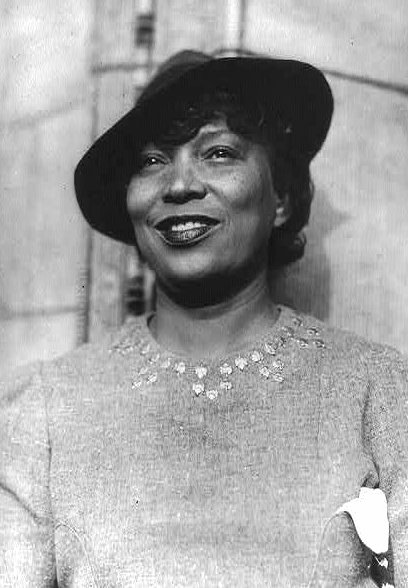
Zora Neale Hurston wrote Their Eyes Were Watching God in Haiti in 1937, in a period of roughly seven weeks, while on a Guggenheim Fellowship intended to fund her ethnographic research on Afro-Caribbean religion. The novel was published that September to mixed reviews. Richard Wright, in a notoriously hostile notice for New Masses, accused Hurston of writing for a "white audience whose chauvinistic tastes she knows how to satisfy." The book sold modestly, went out of print within a decade, and stayed out of print for nearly thirty years.
This was, in hindsight, an extraordinary misreading. Their Eyes Were Watching God is the first novel in American literature to take the interior life of a Black woman as its whole subject. Janie Crawford's three marriages, her ultimately ecstatic relationship with Tea Cake, her return to Eatonville at the novel's close — all of it is rendered in a lyrical free-indirect style that reproduces the cadences of Southern Black speech without condescension or explanation.
Hurston's broader project, however, was ethnographic before it was fictional. She was trained under Franz Boas at Columbia and was one of the first anthropologists of any race to conduct systematic fieldwork on Black Southern folklore. Her 1935 book Mules and Men and her 1938 book Tell My Horse documented the folk traditions of Florida, Louisiana, Haiti, and Jamaica with a precision and respect that had no real precedent.